


Steel-framed internal doors used to feel like a “loft conversion” detail… something you’d see in industrial-style apartments and warehouse offices.
Now they’re everywhere. And not because it’s a trend.
Architects and interior designers are specifying steel-framed internal doors because they solve a real problem in modern buildings… how do you create defined spaces without blocking light or making an interior feel chopped up?
That’s where steel doors come into their own.
The real reason people choose steel doors
Most homes, apartments, offices and hotels are now designed around open-plan layouts. It looks great on day one. But in reality, open plan can become noisy, chaotic, and hard to live with.
Clients want structure back… but they don’t want to lose the sense of openness.
Steel-framed internal doors allow you to divide spaces while keeping:
- natural light flow
- visual connection between rooms
- a sense of openness
- architectural definition
In short… they let you zone spaces properly without boxing them in.

The grid layout isn’t just “a look”… it’s structure
A well-designed steel door doesn’t just fill an opening. It creates rhythm and geometry inside a space. The grid becomes part of the interior language, like panelled joinery or shadow gap details.
This is why the best doors don’t look like a product. They look like they were designed as part of the building.
Why steel works better than timber for this style
Timber doors can look beautiful. But when you want slim frames, large glazed areas, and precision, timber starts to show limitations.
Steel gives:
- slimmer sightlines
- stronger frame rigidity
- cleaner edge definition
- better long-term performance in high-traffic areas
In hospitality and commercial work especially, that durability matters.

What makes a steel-framed door look expensive
Two things separate average steel doors from high-end steel doors:
1) Proportion
A door can be steel and still look wrong if the grid isn’t balanced. When mullions are randomly placed, the whole elevation feels off. On the best projects, grid lines align with the architecture, joinery or adjacent glazing.
2) Finish
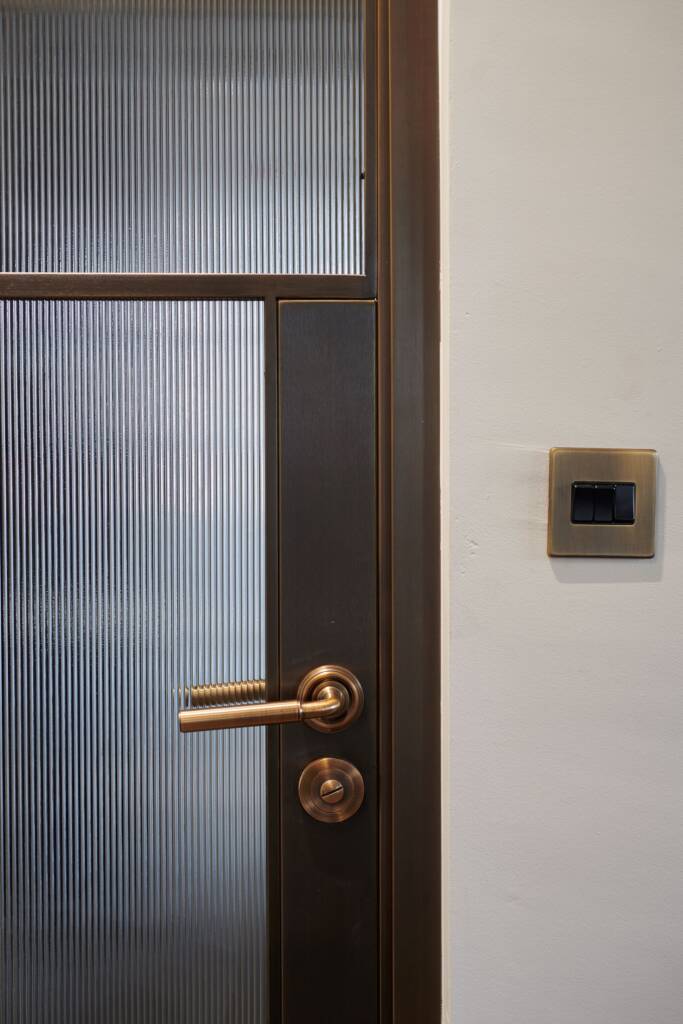
The finish is what stops it looking like “painted metalwork”. It adds depth and character. In high-end interiors, the finish is often what makes the door feel like a feature, not just a divider.
Why designers are pairing steel doors with antique finishes
This is where the market is going… away from flat black and towards warmer, richer tones.
At Artell, we supply steel-framed internal doors in:
- Antique Brass
- Antique Copper
- Antique Bronze
- Gunmetal Brushed
These finishes work because they don’t feel clinical. They sit naturally with stone, timber, plaster finishes, and warmer colour palettes.
They look “designed”, not sprayed.
Steel-framed doors aren’t just a trend… they’re a tool
The best interiors feel structured but not closed off. That’s why steel-framed internal doors have become a staple.
They allow you to create rooms inside open plan layouts, control privacy, and add architecture to interior spaces… without losing light.
And that’s why they’re not going away any time soon.
If you’re working on a project and want help specifying a steel-framed internal door system, Artell can support layouts, finishes, glazing options, and technical coordination.
